
Project Information
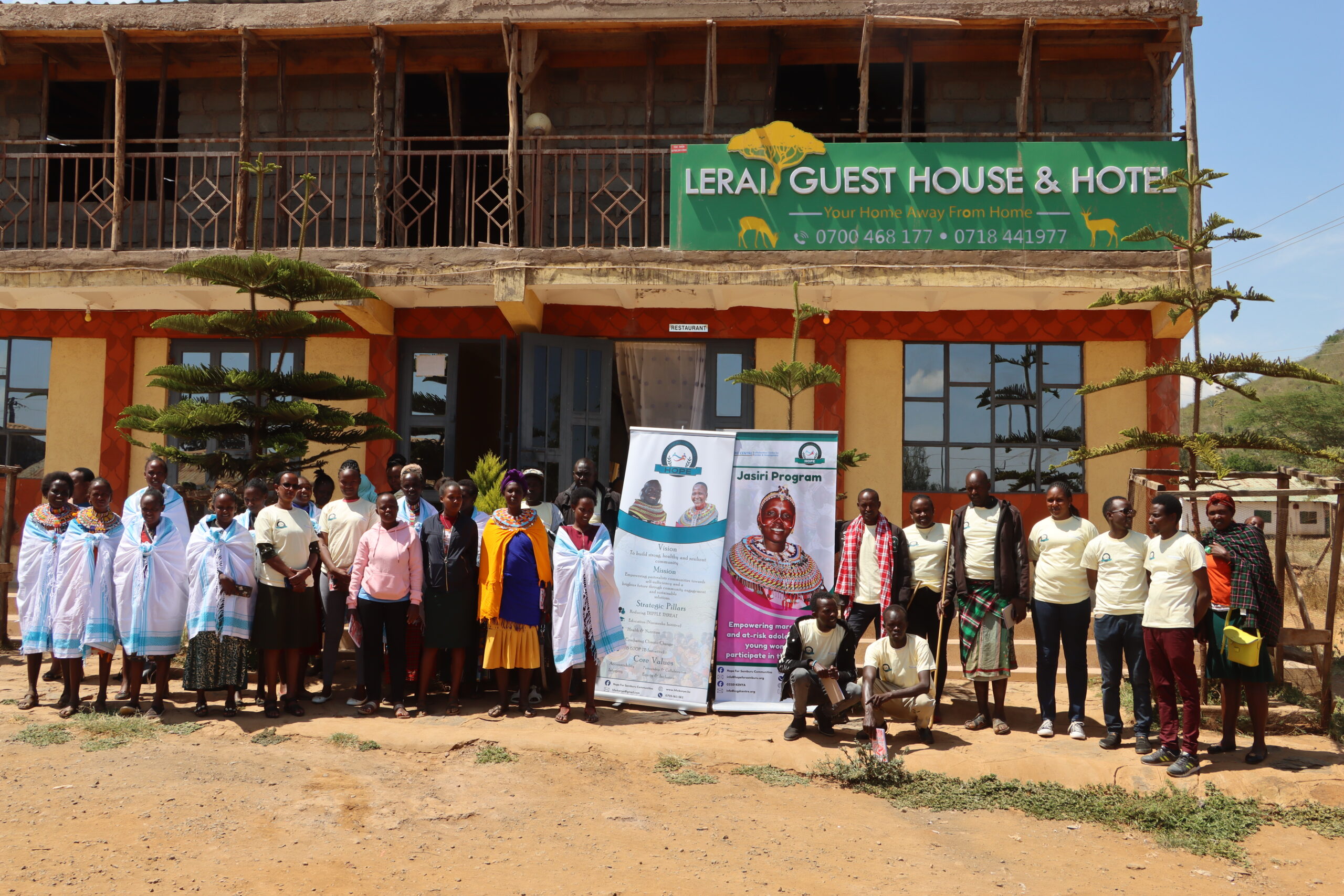
The Jasiri Program: Empowering Survivors & Fighting GBV
Under our Gender-Based Violence (GBV) focus area, Hope For Samburu Communities (HFSC) implemented the Jasiri Program. This initiative was designed to uplift vulnerable individuals and dismantle the systemic barriers that perpetuate violence against women and girls in Samburu County.
The primary goal of the Jasiri program is to empower girls and young women in Kenya who are at risk of gender-based violence (GBV) by fostering economic independence, resilience, and community support systems.
Key Activities & Impact
To create lasting change, the program focused on a multi-faceted approach
Economic Empowerment & Skills Tracking
Pre-identified GBV survivors and mapped them to customized loans, grants, and skilling pathways while monitoring their progress in business setups and apprenticeship programs.
Community & Leadership Sensitization
Trained 30 local chiefs, village administrators, and Nyumba Kumi members on GBV prevention and response. We also engaged traditional and religious leaders to actively shift deep-seated cultural beliefs that perpetuate violence.
Safe Spaces & Dialogue
Conducted community-wide male engagement sessions, targeted sensitization in schools for boys, and used youth sports tournaments to spread GBV awareness
Inclusive Advocacy
Hosted dedicated "speak-out" sessions providing married and unmarried child mothers with a secure, judgment-free space to share challenges and seek support.
Protection & Justice
Formed grassroots support networks by training local women and girls as community paralegals and empowering youth as dedicated GBV Champions.
Frequently asked question
Who were the target beneficiaries of this project?
The Jasiri Program specifically tailored its interventions to support gender-based violence survivors and young women aged 18 to 35 who are at immediate risk. Our scope extended to other highly vulnerable groups within the community, including married and unmarried child mothers, youth, and persons living with disabilities. Beyond direct survivors, the project actively engaged key local stakeholders and community influencers—such as traditional elders, religious leaders, boys in school, and 30 local administrative leaders including chiefs and Nyumba Kumi members—to foster a safer, more supportive environment for everyone.
What can you find on this project page?
On this dedicated project page, you can explore detailed documentation of our comprehensive field activities and systemic interventions. Visitors will find information regarding how survivors are actively linked to micro-finance, legal aid, psychosocial support, and medical case management, alongside the educational frameworks used to train our grassroots community paralegals and youth GBV Champions. Additionally, we have included a media gallery featuring photos and impactful field updates that highlight our community sensitization forums, youth sports engagement initiatives, and resource distribution drives across Samburu North and Samburu West.